Friday, 11 April 2014

Themes of The Tempest


  • Prospero inviting admiration and contempt
  • Conflict between higher and baser instincts
  • inheritance/succession
  • control/power
  • land
  • betrayal
  • magic
  • humanity
  • social hierarchy
  • civilisation
  • justice 
  • revenge and forgiveness
  • colonisation
  • learned behaviours
  • chaos
  • freedom vs confinement
  • illusions vs reality
  • deception
  • love
  • family
  • learning/discovery
  • free will

Thursday, 10 April 2014

As My Ancestors Did

Following the path of my fore-mothers,
Coarse and soft,
Old and new,
Rose Red and pea green,
A misty dream,
Of once lived lives,
Around winter fires,
Dried out and pressed,
Fingers darting like swallows,
Trapped between white washed walls,
Methodical like a tin drum,
Until it is finished.
Inhaling in the fresh quiet,
There is yet more work to be done.

Tuesday, 8 April 2014

Critical Views on Revenger's Tragedy

J.LSimmons


  • the tongue's fiendish urge to wag powerfully, frustrated with the desire to "be express'd," tickles Vindice willy-nilly into making his proud confession of murder to the new Duke
  • the murderous Vindice gives tongue to what might have remained mute 
  • disillusioned Christian humanist 
  • adapted conventions of satire and the moral interlude

  • Michael Neill


  • If marriage uses the woman's body as good money and unequivocal speech, rape transforms her into counterfeit coin, a contradictory word that threatens the whole system. - Patricia Joplin 
  • might be called the Viper and her brood - serpent carelessly nourished in the bosom of Middleton's state is the duchess, and her brood are a hatch of apparently fatherless sons, together with the duke's bastard
  • revenge is scarcely dramatized as a problem here unlike Hamlet
  • Spurio is given a symbolically central role in the social economy of his play
  • Vindice's description of vengeance as "murder's quit rent . . . tenant to tragedy" (I.i.39-40) nicely suggests its purely conventional role in Middleton's scheme
  • gender-coded issues of inheritance and usurpation are given exceptional prominence in the play's satiric design 
  • the bastard as a kind of living emblem for the usurping appetite 
  • definition of a bastard as "whore's son" implies that the anxieties surrounding bastardy had a great deal to do with its disruption of the proper line of paternity through the creation of a child that could only be defined as its mother's son and it constituted a challenge to the patriarchal order and its fictions of legitimate descent
  • Spurio's proclaimation that "Adultery is my nature" (I.ii.177) does more than  justify incest with his stepmother as a wittily symmetrical revenge against his adulterous father
  • illegitimate children were "a special class of transgressive male," credited with an unusually passionate and vigorous nature
  • but bastards would draw "a certeyn corruption and stayne from the sinne of his parentes"- Sir John Fortescue
  • form of genealogical counterfeiting because it threatened to displace the "true" heir with a "false" and debased substitute
  • play contains elements of tragedy, satire, and history 
  • extravagant irony of self-loss
  • Vindice being hired to kill his counterfeit self illustrates the governing principle of revenge drama, whereby the revenger is transformed into the simulacrum of the criminal he seeks to punish but could also be red as destabilization of identity characteristic of a world of bastard coining
  • Middleton locates his court, where everything goes "in silk and silver" in a degraded Silver Age, mockingly emblematized by the "silver years" of the duke 
  • progressive debasement of the currency of dukedom, climaxing in the farcical substitutions of act V where five dukes rise and fall in quick succession 
  • Vindice ironically proves himself to be the most prolific and successful of all the play's counterfeiters 
  • Vindice calls himself "Piato" ("plated") which identifies him with "blanched" coins (base metal plated over with silver to improve its appearance),'7 thereby associating him with the deceptive glitter of the whole court 
  • If men are coiners, it is women, according to Vindice, who are most "apt... to take false money" but also to become it as Gratiana and Castiza are liable to be "changed / Into white money" by his labours
  • Castiza's flesh is metamorphosed into a form of material wealth


  • Robert Ornstein Vindice dies "not because the moral order is restored or because the goddess Astraea re turns to earth," but because of the selfish motivations of a crafty politician

    Brian Gibbons Vindice's death is so abrupt that it cannot be regarded seriously

    Arthur.L.Kistner and M.K.Kistner


  • commonplace of Elizabethan and Jacobean serious drama that the protagonist must die 
  • The playwright's ability to convince his audience of the necessity of his hero's death is one determination of the success or failure 
  • If Vindice's fall is to have moral significance, it must be inevitable; that is, it must fulfill the logical expectations of a moral system. 
  • not the simple reward-for-the-good and punishment-for-the-bad morality that has generally been imposed on the play 
  • like Vindice, Lussurioso contrasts the era with other times which were less sinful and 
  • Antonio speaks of the perversion of justice "in this age" (I.iv.55), and Castiza laments that "The world's so chang'd' 
  • the reward of virtue is demonstrated in the first scene: the skull of Gloriana, poisoned for her chastity, and, through neglect, the death of Vindice's father, worthy in mind but not in estate 
  • vice is to advancement as virtue is to poverty 
  • Virtue, in the forms of Castiza, Gratiana, and Antonio's wife, dwells away from the Duke's palace but the court tries to buy/take them - Gratiana is temporarily overcome by temptation and Antonio's virtuous wife is ravaged by the court
  • Vindice's relationship to the court, the source of corruption, grows stronger throughout the play, and as it does, his virtue declines - his acceptance of a guise of evil is his first step downward 
  • not the reluctant, tortured decision for revenge and justice that characterizes Hamlet but an eager lust for the enemy's blood 
  • Vindice has brought Gloriana to court as a prostitute and murderess

  • Henry Hitch Adams Vindice's death satisfies the claims of heavenly justice

    Larry S.Campion 'an obsessive loathing of the sexual sinfulness of men'


    Hamlet Act One Summary

    1. Barnardo and Francisco are patrolling separately around the castle and don't recognize each other straight away. Horatio and Marcellus enter, Franisco leaves and they talk about the ghost they have seen. The ghost enters.

    Barnardo: Looks a not like the King?

    Horatio: What art thou that usurp'st this time of night,/Together with that fair adn warlike form/In which the majesty of buried Denmark/Did sometimes march?

    The Ghost leaves without answering, and they talk about Old Hamlet's militaryness and how his ghost has come before, and how the Kingdom was preparing for war with Old Fortinbras and how they had fought in single combat.

    Horatio: This bodes some strange eruption to our state

    Barnardo: Well may it sort that this portentous figure/Comes armed through our watch so like the king/That was and is the question of these wars

    Ghost enters again

    Horatio: Stay illusion

    Ghost leaves again after Horatio asks it if if has a message or unfinished business

    2. All the court is on stage and Claudius addresses everyone, telling them to move on and embrace his reign and his marriage to the old king, his brother's, wife, and comes up with plan to end war with young Fortinbras.

    Claudius: by thinking of our late dear brother's death/our state to be disjoint and out of frame

    Talks to Laertes who wants to return to Paris, then turns to speak to Hamlet, with Getrude joining him in urging Hamlet to 'cast [his] nighted colour off']

    Hamlet: Seems madam? nay it is, I know not seems./ 'Tis not alone my inky cloak, good mother...these indeed seem for they are actions that a man might play

    Claudius: 'tis unmanly grief

    Claudius tells Hamlet he is his father now and not to go back to Wittenberg, with Getrude's beseeching persuading

    Claudius: Be as ourself in Denmark

    Every leaves and Hamlet begins his first soliloquy

    • o that this too too solid flesh would melt
    • that the everlasting had not fixed his canon 'gainst self-slaughter
    • How weary, stale, flat and unprofitable/seem to me all the uses of this world
    • things rank and gross in nature posess it merely
    • this hyperion to a satyr
    • frailty, thy name is woman
    • a beast that wants discourse of reason would have mourned longer
    • no more like my father than I to hercules
    • post with such dexterity to incestuous sheets
    • it cannot come to good/but break, my heart, for I must hold my tongue
    Horatio Marcellus and Barnardo enter and tell Hamlet about the ghost who is very interested and says he will join them tonight in the hopes of seeing it again.

    3. Laertes talks to Ophelia about leaving and warns her not to get to attached to Hamlet

    Laertes: he himself is subject to his birth./He may not, as unvalued persons do,/ Carve for himself, for on his choice depends/The sanctity and health of this whole state

    Laertes: your chaste treasure open to his unmastered importunity... the chariest maid is prodigal enough/if she unmask her beauty to the moon

    Ophelia listens to his lesson but thinks that he is being a little hypocritical. Polonius enters and starts advising Laertes.

    Polonius: Give thy thoughts no tongue/Nor any unproportioned thought his act... Give every man they ear, but few thy voice... This above all, to thine own self be true

    Laertes leaves and Polonius quizzes Ophelia on what they were talking about before his arival. She tells him about Halet and he tells her off

    Ophelia: He hath my lord of late made many tenders of his affection to me

    Polonius: Think yourself a baby/that you have tane these tenders for true pay/which are not sterling
    Ophelia: My lord he hath importuned me with love in honourable fashion

    Polonius: When the blood burns, how prodigal the soul/lends the tongue vows

    He tells her to keep away from Hamlet and she says she shall obey.

    4. Hamlet Horatio and Marcellus are watching out for the ghost, they hear a flourish as apparently Claudius like to partay. The ghost enters and Hamlet is amazed/confounded.

    Hamlet: Thou com'st in such a questionable shape/that I will speak to thee. I call thee Hamlet/King, father, royal Dane

    Ghost beckons Hamlet and Horatio and Marcellus warn him not to go but he does.

    Marcellus: Something is rotten in the state of Denmark

    5. Now Hamlet and the Ghost are alone together the Ghost speaks, describing his living situation in the afterlife

    Ghost: I am thy Father's spirit/doomed for a certain term to walk the night/And for the day confined to fast in fires,/Till the foul crimes done in my days of nature/are burnt and purged away

    Ghost: If thou didst ever thy dear father love-
    Hamlet: Oh God!
    Ghost: Revenge his foul and most unnatural murder

    Hamlet: Haste me to know't, that I with wings as swift/ as meditation or the thoughts of love/may sweep to my revenge
    Ghost: I find thee apt... so the whole ear of Denmark is by a forged process of my death rankly abused, they serpent that did sting thy father's life now wears his crown
    Hamlet: O my prophetic soul/ My Uncle?
    Ghost: Ay, that incestious, that adulterate beast... won to his shameful lust the will of my most seeming virtuous queen

    Ghost: taint not thy mind, nor let thy soul contrive/Against thy mother aught

    Ghost describes his murder and demands revenge, exiting and leaving Hamlet to solioquoise his anguish, swearing only to remeber revenge

    • and thy commandment all alone shall live/Within the book and volume of my brain/unmixed with baser matter
    • O most pernicious woman
    • one may smile, and smile, and be a villian; At least I'm sure it may be so in Denmark [writing]
    Horatio and Marcellus come back and he makes them swear four times not to tell anyone whats happened and that he will pretend to be mad

    Hamlet: There's ne'er a villian dwelling in all Denmark/But he's an arrant knave
    Horatio: There needs no ghost, my lord, come from the grave,/to tell us this

    Hamlet: There are more things in heaven and earth Horatio/than are dreamt of in your philosophy

    Hamlet: As I perchance hereafter shall think meet/to put an antic disposition on

    Monday, 7 April 2014

    Love in Paradise Lost

    3.  “One way or another, poetry always seems to be concerned with love.” How far do you agree with this view?

    Both Gascoigne and Milton examine the fidelity of love, and the power it has over one’s action, though while Gascoigne focuses primarily on the love between a man and a woman, Milton goes on to inquire into the relationship between God and Man, and the effect of love for one’s self.

    Milton looks into the love between Adam and Eve, putting it at the heart of his poem by involving it in the dilemma of the fall. Book 9 of Paradise lost shows the scope of Adam and Eve’s relationship, with their lovingness turning into lust after the fall,with Milton noting this change’s catastrophic effect on their relationship. Before the fall they are ‘handed’, merged together and completely united, with this ‘handedness’ not only illustrating their closeness but also their equality, going through life as one. Later however, Adam ‘seizes’ Eve’s ‘hand’, with the violent and commanding implications of the word ‘seized’ indicating the effect of lust on their relationship, with love turning to desperation, and they make love on top of Eve’s beloved ‘flowers’, perhaps connoting that their behaviour destructs the natural way ordained by God. Milton however complicates this, as Eve ‘withdraws’ her hand from Adam’s before the fall, seeking separation in order to labour better as their ‘discourse’ and ‘smiles’ distract her from her work. This could illustrate the contemporary Restoration shift to women having more ability to work, and women such as Celia Feinnes who visited every county in England riding alone on horseback, wanting more freedom, although it could also express a desire about the infidelity of women. Indeed as Eve is without Adam she could be seen as being wooed by Satan who flatters her ‘divine beauty’ whereas in Gascgoine’s poem the ‘doubt’ originates from the narrator’s female lover, with him rejecting the other ‘fish’ in the ‘Sea’. Eve however, does not spurn Satan, with his courtly lover language matching that of Adam’s, and the fact that he stands ‘erect’ before her having phallic implications. Adam’s fidelity however is never in question, as Milton makes it clear that he falls for Eve, calling it a ‘trial of love’ much as a courtly lover would compete for his lady and be ready to die for her. Here then, Milton could be seen as echoing male writers long lament of the constancy of men’s love in comparison to women’s, or at least the resistance of women to submit to their place in a relationship as Eve refuses to heed Adam’s warning about the ‘danger’ that might await her, and how she would be better off near his ‘strength’. Either way, Milton bemoans the loss of the pure love that Adam and Eve once shared, with the radical change showing Milton’s readers the bitter consequences of sin.

    The other source of infidelity is that of humankind to God, with the breach of this love at the heart of Milton’s poem. He begins Book 9 immediately saying that there is ‘no more’ of the relationship that once existed between ‘God and Man’ where they once shared ‘venial discourse unblam’d’. The word ‘discourse’ suggests genteelness, learning but also discussion, with man and God talking ‘venially’ as friends. The fact that Eve says that their ‘reason is their law’ could perhaps even connote that God didn’t have to rule over them, with no laws being needed as Adam and Eve wouldn’t have contemplated evil. The character of God however, does not feature in the book, with no divine intervention preventing Adam and Eve from disobeying God, which could be seen as undermining the closeness that Milton tries to suggest they had, or could be shown as God allowing them to make their choice, with Milton perhaps examining the worth of love if it is false, with God giving them freedom to test their love. Milton’s contemporary audience would have been aware of the commandment to ‘Love the Lord your God above all else’, with Eve and Adam’s failure to do so being their downfall. Gascoigne’s narrator seems more dependable than that, but only because of the foolishness of ‘wishing’ that you could have all the fish in the sea for oneself ‘alone’ rather than because of his undying love. That he knows that it is futile to ‘wish’ does not diminish the fact that the word connotes that having many women would be something to be wished for, with him only containing himself because he knows that it would be ‘in vaine’. Adam and Eve however do not remain faithful, with Eve loving herself more and Adam loving her more, with Adam’s ‘glorious trial of love’ for Eve having implications that love for her is ‘glorious’ when in fact Milton shows that God has the ‘glory’. Hence while Adam is undergoing a trial he chooses the wrong lover to fight for and threatening the rest of mankind’s relationship with God. Milton therefore seems to urge his readers to rexamine their love for God and to put it before all else, unlike Adam and Eve who reject him and lose all the closeness they once had with their maker.
    Milton shows that love of the self is an obstacle to love of God, and a damning force. Both Satan and Eve are driven to breaking away from God because of their wish to become ‘gods’ themselves, with vanity and arrogance driving them away from him. Satan’s wish to have the ‘glory sole’ connotes that he fights for himself alone, as although he has freed the ‘angelic multitude’ he will be the ‘sole’ glorious one, taking the place of God and perhaps having the same ‘adorers’ as God. Likewise he persuades Eve to think better of herself, calling her ‘divine’ and fit to ‘rise’ up to be amongst ‘Gods who will properly appreciate her. Satan coaxes the same forces of vanity and love of the self in her as have motivated him to try to rise up. That Milton chooses Eve, not Adam, to fall for this flattery perhaps reflects common contemporary beliefs in women’s only use being in their beauty, though it could also be argued that Eve wants ‘superiority’ and more for herself because at the moment she is ‘inferior’, with Adam not feeling the same need to be appreciated because he is already at the top of the human hierarchy. That would therefore shift the blame for Eve’s want to better herself onto God, but Milton combats this by making his universe a resolutely meritocratic one, with Adam being above Eve as he has more ‘reason [and] strength’ whereas as Eve has only ‘beauty’. There can be little wonder then, in how Satan is able to use Eve’s only strength to manipulate her, with the ‘fairness’ of her fruit matching her own ‘fairness’. However, Milton make Eve repeat God’s commandment as soon as she sees the tree, showing that she has full knowledge of how it will cause ‘death’, so that the reader knows that she is fully informed and has complete responsibility for her downfall, choosing her own wish to become a ‘God’ over loving and obeying the God who made her. The wish to become a ‘God could be seen as disregarding God’s purpose for Eve and Satan’s lives, or as idolatry, with both upsetting God’s ordained order , building up suspense in the reader about God’s reaction to this having already heard about Satan’s punishment. Gascoignes’ narrator is similarly aware of the consequences of pursuing to many women, with their boats becoming stuck, with this being mirrored in Milton’s probable condemnation of the personal life of Charles II who was famous for his parties and womanising, his hedonistic lifestyle putting his own wishes for pleasure above religious ones.  Similarly Eve and Satan’s love of themselves and wish to promote their own wishes is shown to contradict God’s wishes and to interfere in the relationship between them. Therefore Milton seems to show how love can be a dangerous force hen directed in the wrong way, hinting that the self must be subjected to God and all one’s life devoted to serving him out of love, showing the reader the terrible consequences of diverging from the plans of their loving God.


    In conclusion then, Milton examines how love can go wrong, condemning infidelity and love of the self, and advising his religious audience to put the love of God before all else despite living in the increasingly vain and self-centred world of the Restoration.

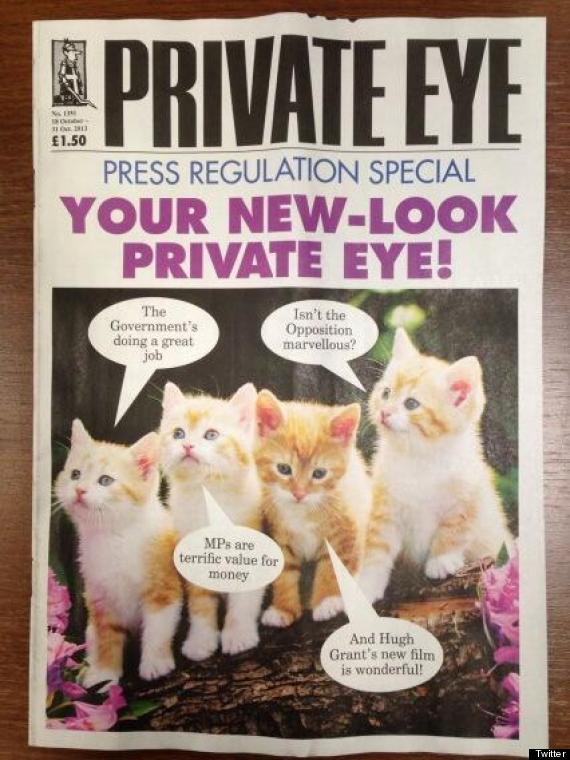
    Different Views on the Future of Press Regulation

    Steven Barnett:


    • Press campaign to try to paint charter as intruding into press freedom
    • an all-party agreement built around a Royal Charter which could, for the first time, provide a mechanism for effective, independent and enduring self-regulation of the press
    • Parliament standing up to the corporate might of some very powerful media enterprises
    • press focused on celebs to cover up other transgressions
    • three crucial ingredients: a Board which is independent of influence either from the industry or from politicians; a speedy complaints process for complainants; and a Code of Conduct which will spell out the boundaries of what is acceptable—just as the Press Complaints Commission code does now—but which, crucially, will include ordinary working journalists rather than being controlled entirely by editors, define public interest exceptions to breaches of the Code rather than leaving them – as now—vague and inchoate

    David Cameron:
    warned the press that it runs the risk of facing "hideous statutory regulation" in the future if the Independent Press Standards Organisation declines to seek recognition under the terms of the new royal charter.

    Should join now before a less liberal government forces new regulations on the press

    Not a press law

    Ryan J Thomas:


    • Since emerging from the shadow of the Star Chamber, however, the British press has long been operationally free.


    • In the 20th century, a series of crises of media ethics and the emergence of the strictly regulated broadcasting industry prompted the formation of the General Council in 1953 as an industry regulator. The General Council began under a non-binding framework, tasked with shepherding the press to a more ethical performance after a lapse in public trust in the media. Funded by newspaper proprietors and staffed by newspaper editors, the General Council was created as an alternative to the specter of statutory regulation, establishing a trend that would last for over fifty years.


    • 2004, when journalists from the Daily Express approached the PCC with claims that they were being pressured to write racist articles
    • early 2011, the Express Group of newspapers and magazines opted-out altogether of the PCC, meaning that members of the public have no recourse if they are aggrieved by the content of an Express Group publication

    Gordon Rayner:


    Sir David Calcutt QC:
    In 1993 complained that the PCC was “in essence, a body set up by the industry, financed by the industry, dominated by the industry, and operating a code of practice devised by the industry and which is over-favourable to the industry.”


    John Mann: (Labour MP):


    • Maria Miller should be stripped of her responsibility for determining the future of press regulation, the MP who triggered the investigation into her expenses has said
    • The Culture Secretary has repeatedly said that newspapers should not be allowed to police themselves when it comes to implementing Lord Justice Leveson’s recommendations for a new regulatory body. 
    • “It is ironic that you have MPs self-regulating and self-policing themselves while Maria Miller, the MP they were taking this decision about, is the very minister responsible for taking decisions on self-regulation of the press.


    Roy Greenslade: 
    http://www.theguardian.com/media/greenslade+press-regulation


    • Lord Phillips of Worth Matravers, and another man similarly plucked from obscurity, Sir Hayden Phillips
    • Phillips one is a former supreme court judge, its founding president no less. Phillips two is a former senior civil servant
    • according to the report presented by Lord Justice Leveson back in November 2012, the appointment panel "should contain a substantial majority of members who are demonstrably independent of the press"
    • the panel seeking a candidate for the £150,000-a-year post are hoping to avoid appointing a peer or anyone connected with politics
    • Some publishers and editors who have yet to sign Ipso contracts are said to be waiting to see who it is before deciding whether to jump aboard - The Guardian, The Independent (which includes the London Evening Standard) and the Financial Times
    • Ipso is no different in structure than the PCC and it's purse-strings will be in the hands of the Regulatory Funding Company, and its powers are weighted towards those groups that pay the largest fees
    • It will be a publishers' club in which the better-off members will dictate how that club is to be run
    • Worse, it is a club that will be impossible to leave because it binds those who sign its contracts to a five-year deal
    • Criticizes the PCC's criticism of The Guardian for daring to publish stories about phone-hacking at the News of the World (while letting the hacking paper off the hook) and apparently Under Ipso, The Guardian would have to accept it
    • One key Ipso extra's future is in doubt, the piloting of a potentially useful arbitral arm, as is not endorsed by several publishers
    • Unlikely to use its huge fines
    • not genuine reforms of the previously discredited system
    • the alternative is joining Impress which will seek recognition under the royal charter which is influenced by Hacked Off
    • The charter could, however, be amended by politicians
    • The three abstaining bodies could set up their own regulator which would temporary and would have to pay the costs of staffing, but he doesn't think the Financial Times would do that
    • The financial Times would probably not want any part of Ipso nor a regulator recognised under the royal charter especially as they see themselves as an international newspaper as it sells more print copies in the United States than in Britain and is read more widely outside the UK
    • He likes the idea of handling complaints in-house, through a Guardian-style Readers' Editor or an internal ombudsman which Private Eye has always done
    • Leveson did not recommend the royal charter (he preferred Ofcom)
    • Ipso is only about the freedom of publishers, not the public
    • A charter-recognised regulator offers freedom circumscribed by the state and that, by definition, is not press freedom
    Peter Preston: http://www.theguardian.com/media/2014/jan/12/hacked-off-harangue-ipso

    • Thinks its 'absurd' that Lord Phillips is choosing people involved in IPSO
    • lay members from high positions and journalists on IPSO's new board - ratio is 4:2
    • Thinks Hacked Off's criticisms miss the point - hysterical
    • the means of monitoring its performance still needs tightening
    • If people like the two Phillipses can't be trusted to appoint new superintendents of press regulation, it is hard, frankly, to see who can
    • One of the 'lay members' in Lord Brown who was involved in surveillance - what about revelations about government spying?


    Hacked Off
    • the appointment panel fails to meet Leveson's criteria which stated that it must contain a "substantial majority of members who are demonstrably independent of the press."
    • shows the newspaper companies' utter contempt for the very idea of independence
    • not transparent
    • IPSO includes a serving editor [Witherow] employed by Rupert Murdoch who has displayed an extraordinary bias against the public in his papers' coverage of press affairs
    • exactly the kind of shifty operating that made the PCC such a disgrace
    • whoever is nominally in charge of Ipso will be the puppets of the big news publishers, just as the PCC was
    • Mr Murdoch, the Mail and the Telegraph have ensured that they will hold the purse strings and call the shots. 
    • the PCC was run for the benefit of the press, rather than the public. The same is true of the Ipso project
    • he newspaper industry needs to do to win the public's trust is to establish a self-regulator that meets the basic standards recommended by Leveson and embodied in the royal charter
    • Royal charter not allowed to be meddled with by politicians so press will remain independent
    Hayden Phillips:
    • wide range of candidates of quality and experience will come forward to serve on such an important new national institution

    Ian Hislop:

    • Private Eye not criticised in the Leveson Trials but will be forced to join new system which will penalize it
    • If journalists break the law should be taken to court - all major incidents were breaches of the law - contempt of court, hacking law, the law needs to be observed
    • as soon as the door is open it might be hard to shut
    • Watchdog appointed by the establishment
    • Freedom of press threatened
    • Not just 'bogus right wing lunatics' who are protesting
    • Private Eye criticises press so didn't join the PCC
    • Hacked Off too close to Royal Charter
    private eye

    Johnathan H (of Impress)

    • IMPRESS would not necessarily seek recognition under the Charter
    • aim to be recognisable but only to seek recognition if the founding members wished to do so
    • agree with free speech groups like Article 19 that the Charter does not in itself pose a threat to press freedom, and that any risks in the Crime and Courts Act can be mitigated
    • many journalists are uncomfortable with the post-Leveson framework
    • if recognition under the Charter was a deal-breaker,then could find another way of ensuring the regulator's independence and effectiveness
    • IMPRESS has the added advantage not 'belonging' to the newspapers being regulated

    Ed Mliliband: Too long we've had a system were the press have been marking their own homework

    Christopher Jeffries: (wrongly accused of Joanna Yates murder)

    • Royal Charter will work
    • amendment will give it legislative force
    • impossible to be watered down unless there is a 2/3s majority in Parliament - Hacked Off, Labour and Lib Dems wanted

    q
    r
    s

    Tuesday, 1 April 2014

    Key Quotes about Knowledge in Arcadia


    Knowledge:

    Key Quotes:

    Septimus: We shed as we pick up, like travellers who must carry everything in their arms, and what we let fall will be picked up by those left behind. The procession is very long and life is very short. We die on the march. But there is nothing outside the march so nothing can be lost to it. (page 53)

    Themes: Newtonian Physics, time

    Valentine: It makes me so happy. To be at the beginning again, knowing almost nothing.... A door like this has cracked open five or six times since we got up on our hind legs. It's the best possible time of being alive, when almost everything you thought you knew is wrong. (page 64)

    Themes: Science/Maths, chaos theory, academic research

    Bernard: If knowledge isn't self-knowledge it isn't doing much, mate. Is the universe expanding? Is it contracting? Is it standing on one leg and singing 'When Father Painted the Parlour'? Leave me out. I can expand my universe without you.  (page 84)

    Themes: Conflict between maths and literature, thinking vs feeling

    Hannah: It’s all trivial –your grouse, my hermit, Bernard’s Byron. Comparing what we’re looking for misses the point. It’s wanting to know that makes us matter. Otherwise we’re going out the way we came in. That’s why you can’t believe in the afterlife, Valentine. Believe in the after, by all means, but not the life. Believe in God, the soul, the spirit, the infinite, believe in angels if you like, but not in the big celestial get together for an exchange of views. I f the answers are in the back of the book I can wait, but what a drag. Better to struggle on knowing failure is final. (page 102-103)

    Themes: Conflict between literature/maths, religion, meaning of life, academic research

    Septimus: When we have found all the mysteries and lost all the meaning, we will be alone, on an empty shore.

    Thomasina: Then we will dance. (Page 128)

    Themes: Love/romance, meaning of life, relationships between men and women