Showing posts with label Media Regulation. Show all posts

Monday, 9 June 2014

Case Study: PCC regulating online journalism

Complainant Name:
Mr William Hesselmann

Clauses Noted: 1


Publication: Daily Mail


Complaint:
Mr William Hesselmann complained to the Press Complaints Commission that the newspaper had published inaccurate information in breach of Clause 1 (Accuracy) of the Editors' Code of Practice. The complainant said that the newspaper had misled readers by suggesting that the BBC accommodated the 65 person crew of Lambing Live in hotel rooms costing £279 per night. The real figure, which was only published at the end of the piece, was £58 per night.


Resolution:
The newspaper said that the article had included the BBC's response, which had not mentioned the actual price of the rooms. It had been informed by the BBC only after the publication of the actual price; it had published the BBC's letter addressing this point. It has amended the online article and published the following footnote:
The BBC asks us to point out that in fact the BBC paid £58 per night, not the £279 quoted. This rate amounted to a discount of around 50% off the standard rate, substantially less than other hotels in the area and within the BBC expenses policy. Having the team stay in one location simplified travel arrangements to and from the farm. They also say that a crew of 65 is typical for a production of this kind. The article was updated after the BBC provided further comment on the price of rooms following publication.


Date Published: 30/05/2014


Thursday, 29 May 2014

How Film Censorship Has Changed in the UK

Current technology makes it effectively impossible to censor the written word, theatre censorship was abolished in 1968, and there has never been any systematic regulation of other art forms - anyone seeking to clamp down on such events must mount a private prosecution, a lengthy and expensive process.

  • the British Board of Film Classification was originally founded in 1912 as the British Board of Film Censors
  • BBFC guidelines are based on two main factors: legal requirements (for instance, unsimulated animal cruelty, indecent images of children) and the BBFC's own policies 
  • Current context-based system where artistic merit is a key factor in assessing individual films
  • This is controversial, due to the inevitable inconsistency. Some films are treated much more leniently than others with very similar content, as a result of largely subjective judgements by a handful of people
  • But means a number of important films being passed either uncut or with a milder age restriction
  • A side-effect of its stated commitment to greater openness is that it is now easy to find out if films have been cut in their British versions and current technology makes it equally simple to order uncut and unclassified videos and DVDs from elsewhere
  • When video was introduced in the late 1970s, there was no specific legislation governing its content and major distributors were reluctant to get involved with a medium they considered vulnerable to piracy, meant small independent companies to flood the market with low-budget horror films and lurid advertising campaigns
  • Most had little or no artistic merit, though there was an inclusion of work to be withdrawn by respected genre practitioners Dario ArgentoWes CravenLucio Fulci and Tobe Hooper, arthouse auteurs Andrzej Zulawski and Paul Morrissey, and the then unknown Abel Ferrara
  • May 1982 article in the Sunday Times headed "How high street horror is invading the home". This theme was enthusiastically taken up by the tabloid press, creating what Martin Barker has called a 'moral panic'
  • 194 Criminal Justice Act which added a clause covering potential harm "caused to potential viewers or, by their behaviour, to society" by material dealing with "criminal behaviour, illegal drugs, violent behaviour or incidents, horrific behaviour or incidents or human sexual activity"
  • This was because of the result of the 1994 Newson Report, which alleged that violent videos were capable of causing psychological damage, especially to impressionable children
  • This report wrongly suggested that a definitive link had been established, with Newson merely drawing inferences from individual case studies and her case studies were sourced from often highly speculative accounts in the press rather than independent first-hand research
  • In the post-war years it was fears of social unrest that were near the top of the agenda.
  • The history of British film censorship is as much social as cultural: the reasons films were banned in the 1920s (revolutionary politics) and 1950s (nudity) say as much about the society of the time as anything in the films

  • In our era of far greater equality the BBFC is noticeably tougher on sexual violence today than it was thirty years ago, though correspondingly much more relaxed about most other issues
  • As the nation relaxed into the 1960s, nudity becomes a prime concern. 
  • The early 1970s saw film-makers keen to push at the limits of acceptability.
  • Viewed from 2011, many of the board's decisions seem odd, quaint even, and we are able to see many of the scenes originally deemed unacceptable on DVD reissues.
  • In the 1980s the board changed its name from British Board of Film Censors to that of Film Classification and it was levels of violence that capture the attention.

Read More:
http://www.screenonline.org.uk/film/id/445733/
http://www.bbc.co.uk/news/magazine-15107384

Sunday, 25 May 2014

Censorship Case Study: The Wild One

Problems:

  • Disrespect to figures of authority
  • Contempt
  • Brando was seen as imitable
  • Thought it reflected Teddy Boys at the time
BBFC's Response:
  • Called a 'spectacle of unbridled hooliganism'
  • Didn't issue a certificate
  • Columbia desperate for it to be shown
  • Related to subject as whole - thought it would be difficult to cut
  • Ban stuck until 1967
Then 'Rebel Without A Cause' passed as 'X' which then limited not just the audience (over 16) but also the cinemas that were prepared to show it - BBFC did't want children to witness 'ridiculous and ineffectual parents'

Wednesday, 21 May 2014

Case Study: Copycat Project X Party

Where: Houston, Texas

Media Copied: Project X, a film about Californian High Schoolers who try to throw the biggest party

What copied:

  • Broken Windows
  • Broken walls
  • alcohol bottles
  • Not their home
11 charged with criminal trespassing, caused 100,000 worth of damages


Conforming to media effects theory?

  • glamourising partying
But the film also shows the consequences of this, with even the trailer using police siren sound effects and conversations with the protagonist's parents to indicate this. This fits more with David Gauntlett theory of how media effects research usually lifts parts of a film without considering how the narrative treats elements like sex, drugs and vandalism.

However the film does not end censoring the film's material, with an number of the characters escaping charges and the protagonist's father's applauding him. This was not the case with those involved in the Houston party.

Wednesday, 30 April 2014

Comparison of the PPC and the BBFC


  • Both independent from the government
  • PCC regulate after media content been published, BBFC before - although with internet this could change
  • Need BBFC's permission whereas PCC has a more limited remit
  • Both funded by industry - newspapers signed up to the PCC pay in money according to their circulation and distributors pay to have their films classified

Sunday, 27 April 2014

Film Classification Case Study: The Hunger Games

BBFC's classification:
When: 23/03/2012

Ratings Process: It was initially given a 15 rating and during post-production, the distributor (Lions gate UK Ltd) sought and was given advice on how to secure the desired classification. Following this advice, certain changes were made prior to submission, and 7 seconds were cut to reduce an emphasis on blood and injury.

The cuts were implemented by digitally removing sight of blood splashes and sight of blood on wounds and weapons, and were made in accordance with BBFC Guidelines and policy. These reductions were implemented by a mixture of visual cuts, visual darkenings and the digital removal of sight of blood.

The trailers had been given PG and U ratings as did not show much of the violent arena scenes.

Issues: intense threat, moderate violence and occasional gory moments

Response to Classification:
Who: Daily Mail campaigned against the Hunger Games' 12A rating, parents posting complaints on Mumsnet and social media

Why: Some parents have complained the film scenes of murder and bloodshed were too graphic to be appropriate for children and suggested it should be rated 15.  

Examples: Scenes that have upset some parents include one where a girl screams for her life as she stung to death by killer wasps, another when a young child is skewered with a spear, another battered with a brick and scenes were piles of bodies lay fallen after bloody battles between the combatants. 

BBFC's reason for classification: ‘The company chose to make cuts in order to achieve a ‘12A’ classification.When the finished version of the film was submitted for formal classification, cuts had been made in four scenes of violence and in one scene showing details of injuries. These reductions were implemented by a mixture of visual cuts, visual darkenings and the digital removal of sight of blood.

Case Study: PCC Complaints

A Man vs The Mail on Sunday 

When resolved: 25/4/2014

Clause from the editor's code cited: Clause 10 (Clandestine Devices and Subterfuge)

Incident:
A man complained to the Press Complaints Commission that the newspaper had obtained a photograph from his private Facebook page and published without his consent

Resolution:
The newspaper demonstrated that the photograph had been publicly accessible at the time it had been obtained. Nonetheless, it removed the photograph from the online article and undertook not to use it again.

Thursday, 17 April 2014

Case Study: The Financial Times' Regulation

Why interesting: Was part of PCC, decided not to join IPSO or get involved in Royal Charter, but to regulate itself

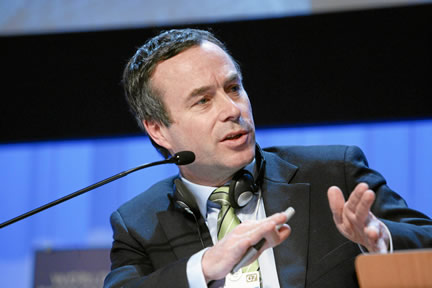
Who's in charge: Lionel Barber (its editor) who says its system will be will be "accountable, credible, robust and highly adaptable to meet the pace of change in our industry."

Why?

  • They say that 'The FT has established a track record for treading its own path at a time of wrenching change in the news business'
  • The FT has 'consistently taken decisions which have marked a break with established industry practice when it is the right thing to do for our readers and business'
  • It 'reflects the FT's standing as an increasingly digital news operation with a global footprint'
  • IPSO and Royal charter are national systems of media regulation, whereas the Financial Times's audience is more international, with 'more than three-quarters of our readers are now outside the UK. Our main competitors are global news organisations, each of whom applies its own system of independent regulation'
  • FT "has been a long-standing member of the Press Complaints Commission' and their exemplary record 'shows that in the overwhelming majority of cases the FT has been exonerated from criticism' (only one ruling against the paper out of only 7 cases)
  • 'Every newspaper and news group must make their own choice regarding regulation'
What will this self regulation look like?
  • appointment of an ombusdman-style person, called an editorial complaints commissioner, who will be independent of the editor
  • 'set up a new mechanism to handle reader complaints in the event that they feel our internal procedures fail to provide an adequate response or redress'
  • creating a new position of editorial complaints commissioner
  • The remit and reporting line will be set out in a public advertisement in due course. The successful candidate will be appointed by a three-person committee
Views on this: 
  • Hacked off The public already know that Ipso is nothing more than a shabby facsimile of the discredited PCC. The FT's announcement today that it won't join demonstrates that Ipso will have even less credibility than the failed self-regulator it replaces.
  • Roy Greenslade (who predicted this) 'unsurprised but the other major players who have yet to sign contracts with Ipso - The Guardian and The Independent - may not follow suit'
  • Scottish Newspaper Society director and Ipso supporter John McLellan “It’s disappointing but not entirely unexpected. The rest of the industry will await with interest to see how the FT’s new in-house system deals with its first significant complaint.”

Tuesday, 15 April 2014

Social Issues That Affect Media Regulation


  • Changing audience consumption
  • Changing social attitudes to sex, drugs, violence - more relaxed
  • More worried about internet
  • Emphasis on classification rather than censorship at bodies like the BBFC
  • More concerned about sexual violence, imitable use of weapons, self harm
  • More openness, less secrecy
  • More concerned with social equality
  • Harm test
Film 
  • Scapegoat for societal problems
  • Moral panics
  • Increased illegal consumption via the internet - unregulated and not restricted by age ratings
  • nanny state?
  • art pushing boundaries
  • better understanding of how children consume films/its effect on them
Press 
  • Need to protect free press
  • freedom of speech
  • press's role in democracy
  • 'public right to know'
  • Phone hacking scandal
  • Globalisation
  • Internet and self-regulation
  • Citizen journalism
  • Super-injunctions

Tuesday, 25 March 2014

Case Study: Human Centipede 2

Why interesting: Could only be released after cuts of two minutes and 37 seconds of cuts during eight sequences of the film


Classification:

  • rare step of refusing to give it a rating, warning that it could fall foul of obscenity laws
  • tried to justify the film as "art"
  • film's distributor agreed to 32 cuts to gain an 18 certificate for DVD release
  • Even so, one member of the board felt he was unable to back the decision. Gerard Lemos, one of the BBFC's vice presidents, did not feel it was classifiable and abstained from putting his name to the decision
  • The film was also banned in Australia for a short period of time. It is banned in New Zealand.
Plot:

An obsessed horror movie fan grafts a number of people together for kicks

the BBFC said: "There is little attempt to portray any of the victims in the film as anything other than objects to be brutalised, degraded and mutilated for the amusement and arousal of the central character, as well as for the pleasure of the audience."

It added that the film breached classification guidelines and "poses a real, as opposed to a fanciful, risk that harm is likely to be caused to potential viewers"

cuts related to "sexual violence, graphic gore and the possibility of breach of the law relating to obscenity"

Response:

Director Six responded to the BBFC's decision in a statement released the next day to Empire magazine. Six criticised the BBFC for including film spoilers in their report, and stated that the film was "...fictional. Not real. It is all make-belief (sic). It is art..." and that viewers should be able to choose for themselves whether or not they decided to view the film. Six also referred to the BBFC's refusal to classify the film as "exceptional".

The notoriety of the UK ban has been used to help market the film in other countries

Friday, 21 March 2014

Researching Media Regulation

Press:
PCC:
Pressure Groups:
http://hackinginquiry.org/
http://www.theguardian.com/media/hacked-off-campaign
http://mediastandardstrust.org/projects/hacked-off/

http://www.theguardian.com/media/press-regulation

The leveson inquiry:  http://webarchive.nationalarchives.gov.uk/20140122145147/http:/www.levesoninquiry.org.uk/
http://www.bbc.co.uk/news/uk-15686679
http://www.theguardian.com/media/leveson-inquiry
http://www.huffingtonpost.co.uk/news/leveson-inquiry/
http://www.telegraph.co.uk/news/uknews/leveson-inquiry/

Film:

BBFC: http://www.bbfc.co.uk/
http://www.cbbfc.co.uk/what-bbfc

Changes to ratings: http://www.independent.co.uk/arts-entertainment/films/features/the-bbfc-has-announced-new-film-classifications-for-teens-but-can-the-ratings-war-be-won-9062688.html
http://www.theguardian.com/media/2002/aug/30/filmnews.filmcensorship
http://www.theguardian.com/music/2014/jan/13/bbfc-wants-age-rating-system-introduced-online-videos

http://www.bbc.co.uk/news/entertainment-arts-25684461

http://www.theguardian.com/commentisfree/2014/jan/19/bbfc-change-film-certs-here-are-mine

http://www.southhillpark.org.uk/1012/cinema/bbfc-classification-18.html

http://www.huffingtonpost.co.uk/pat-higgins/bbfc-killing-independent-film_b_5000755.html

http://www.empireonline.com/features/sex-and-censorship-bbfc

Social Media:

Twitter:

http://www.theguardian.com/world/2014/mar/21/turkey-blocks-twitter-prime-minister

Media Effects:

http://www.mediawatchuk.com/

http://www.pbs.org/kcts/videogamerevolution/impact/myths.html

http://rsa.revues.org/839

Media Education:

http://www.mediawatch.com/